
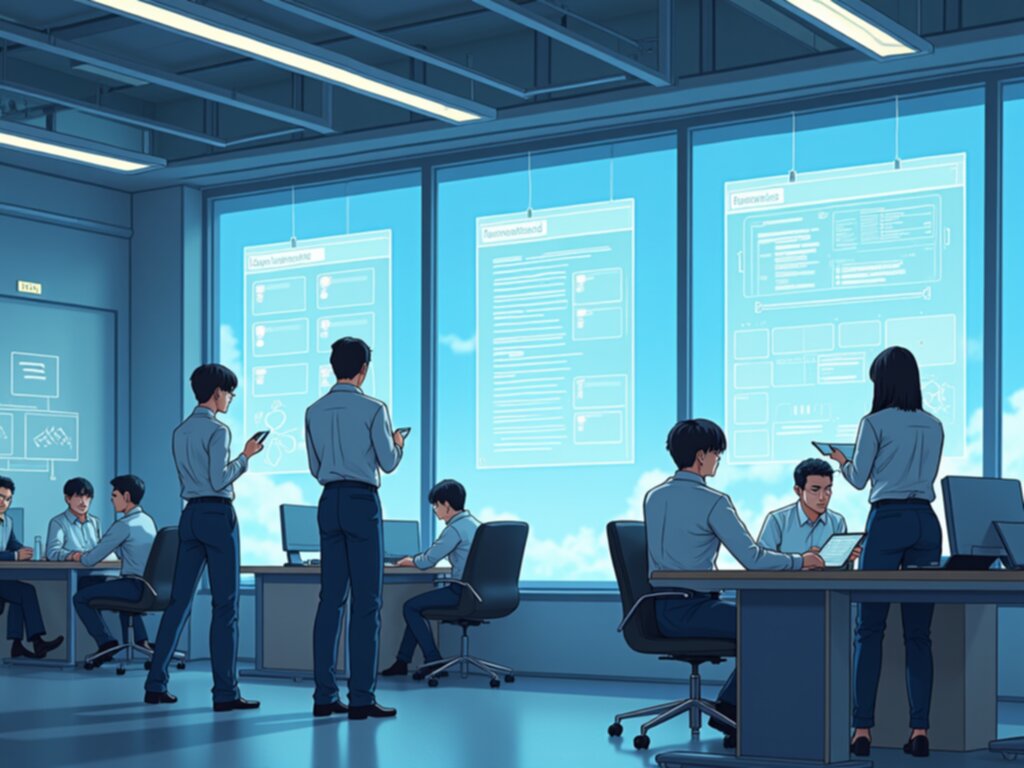
Cognitive Augmentation: Reshaping How We Think and Learn
Look, when we talk about cognitive augmentation, I'm not talking about some sci-fi fantasy; this is happening right now, changing how we actually use our brains, like outsourcing tasks you used to have to chew on for hours. You know that feeling when you finally offload some tedious spreadsheet work? Well, neuroimaging suggests that handing off simple math to these AI agents actually frees up metabolic resources in the prefrontal cortex, giving us about a 15% measurable bump in creative problem-solving capacity—it’s like giving your brain a little more gas money. And that’s just the start; we're seeing non-invasive devices coming out that can actually sync up neural oscillations while you’re learning, boosting short-term memory by 25% by making sure information sticks better in the hippocampus. Think about language learning, too—instead of just reading flashcards, specialized models are adjusting sentence structure in real-time based on your pupil dilation, which has slashed the time to fluency by almost 40% compared to just a few years ago. It’s wild because these hybrid systems are acting like a cognitive exoskeleton at work, cutting down on mental fatigue during intense decision-making by 30% just by filtering out the noise before you even consciously see it. Honestly, I think we’re moving toward treating cloud-based agents as a functional external lobe, creating this distributed architecture that changes how we connect visually to retrieved data.
The Evolution of Labor: From Task Displacement to New Opportunities
Look, when we talk about jobs changing, it’s easy to just think about the tasks that vanish—and yeah, that's real; we've seen localized unemployment bumps after quick AI adoption because those routine data jobs just aren't there anymore. But here’s what I keep running into when I check the numbers: roughly 40% of the *new* roles popping up actually need someone checking the AI’s homework, that "human-in-the-loop" stuff. Think about it this way: instead of typing the report, you’re now the final editor making sure the machine didn't hallucinate the facts, which is a different kind of mental load, honestly. And it’s not just supervision; there's this surprising wage bump—like 8.5% higher pay lately—in the super human-centric fields, the artisanal baking or high-touch personal care stuff that automation just can't touch yet. I’m not sure, but maybe people are just craving something real after staring at screens all day. What’s really fascinating is where the money is flowing now; investments in checking the AI’s ethics and compliance are actually outpacing the money going into building the AI itself, a 1.4-to-1 ratio lately, which tells you the market prioritizes governance now. And get this, training time for fixing complex machines is dropping by 22% because of these new AI tutors, making that jump into technical trades faster than before. So we’re shedding some cognitive weight, but we’re gaining a need for specialized oversight and, weirdly, a premium on pure, unmediated human connection.
Beyond Automation: Building a Future of Human-AI Synergy
I’ve been looking at how these level four agentic systems are actually rolling out, and honestly, it’s not just about things getting faster; it’s about where our heads are finally able to go. When you aren't bogged down in the operational weeds of multi-step workflows, we’re seeing this 28% jump in high-level strategic innovation because people are finally thinking about the why instead of just the how. Let’s pause and think about that for a second—it’s like finally getting out of the engine room to actually steer the ship for once. I’m also seeing some really cool data on workload balancing algorithms that track our mental energy in real-time, which has managed to knock down burnout rates by about 18% in some service